
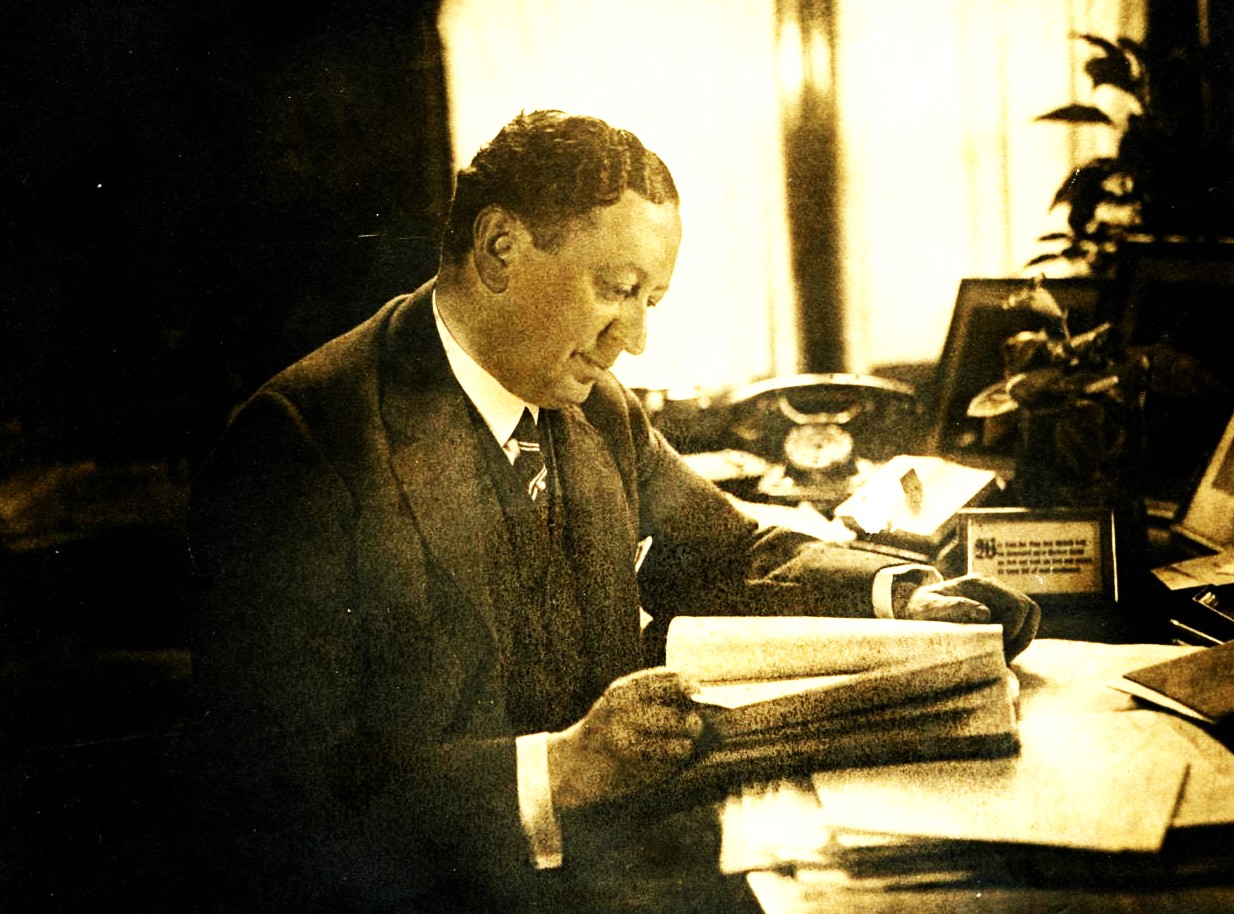
On your festive birthday … a little gift or something to remember, that might make you happy in these rotten times … as your family, we are always around you and always want to be around you! … We believe in your luck because you don’t expect it to fall in your lap but are accustomed to help yourself. You know we never worry about you because we have confidence in your clear mind, and although you will not always admit it, your irrepressibly good heart guides your actions from within.
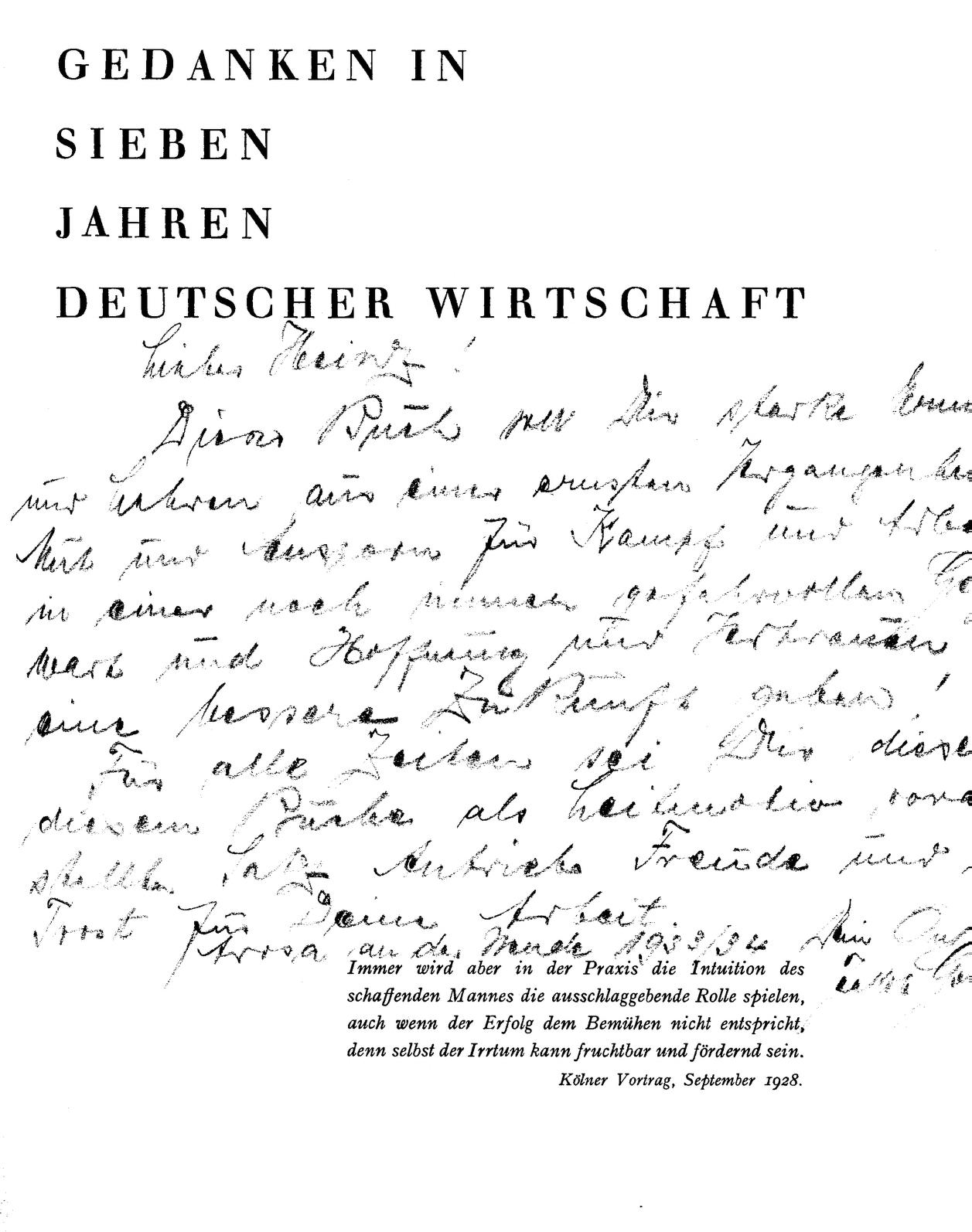
Excerpt from the Goldschmidt siblings’ foreword, to mark Jakob Goldschmidt’s 50th birthday, in Jakob Goldschmidt’s Seven Years: Thoughts on the German Economy 1924-1931 (1932). © Marc Goldschmidt, 2015. Reproduced with his kind permission.
One of seven siblings born to a modest family in Eldagsen, near Hanover, Jakob Goldschmidt (1882–1955) [Fig. 1] ,[Fig. 2] rose, through hard work, energy and perspicacity, to the pinnacle of Weimar Germany’s banking world until the global economic crisis in 1929.

This was followed swiftly by the rise of the Nationalist Socialists, which led first to financial insecurity for Goldschmidt and then, in 1933, flight from his homeland in the face of hostile anti-Jewish persecution.
Parents Markus (1851–1928) and Lina (born 1850) could not afford university for Jakob, leading him instead to take up an apprenticeship at the H. Oppenheimer bank in Hanover in 1907. Jakob then struck out on his own, co-founding the Schwartz, Goldschmidt & Company brokerage firm in Frankfurt in 1909.
Three years later, Jakob married Sophie Wolpert, née Joseph (1884 - 1922), and three years after that, the couple welcomed the arrival of their son Alfred Erwin (known as Erwin) (1916 - 1970). Sophie passed away aged only 38 but the Sophie-Goldschmidt-Mädchenheim (Girls' Home) on Schönhauser Allee was established in her name, one of many charitable and philanthropic organisations supported by the family.
'Vibrant, creative innovation has never been more engaged than with the developments and trends of our times.' Jakob Goldschmidt, The Cologne Lecture, September 1928
Goldschmidt’s ascendency continued with his appointment to the management board of the Nationalbank für Deutschland in 1919, which later joined with the Darmstädter Bank, the merged entity becoming popularly known as the Danat-Bank (Darmstädter und Nationalbank). During the following years, his comprehensive business interests eventually encompassed a network of industries including steel, power, mining, shipping, aviation and insurance, with Goldschmidt advising 123 companies as a board member by 1931. He also advised the Weimar Republic’s chancellors.
Lorem ipsum dolor sit amet, consectetur adipiscing elit, sed do eiusmod tempor incididunt ut labore et dolore magna aliqua. Ut enim ad minim veniam, quis nostrud exercitation ullamco laboris nisi ut aliquip ex ea commodo consequat. Duis aute irure dolor in reprehenderit in voluptate velit esse cillum dolore eu fugiat nulla pariatur.
Block quote
Ordered list
Unordered list
Bold text
Emphasis
Superscript
Subscript


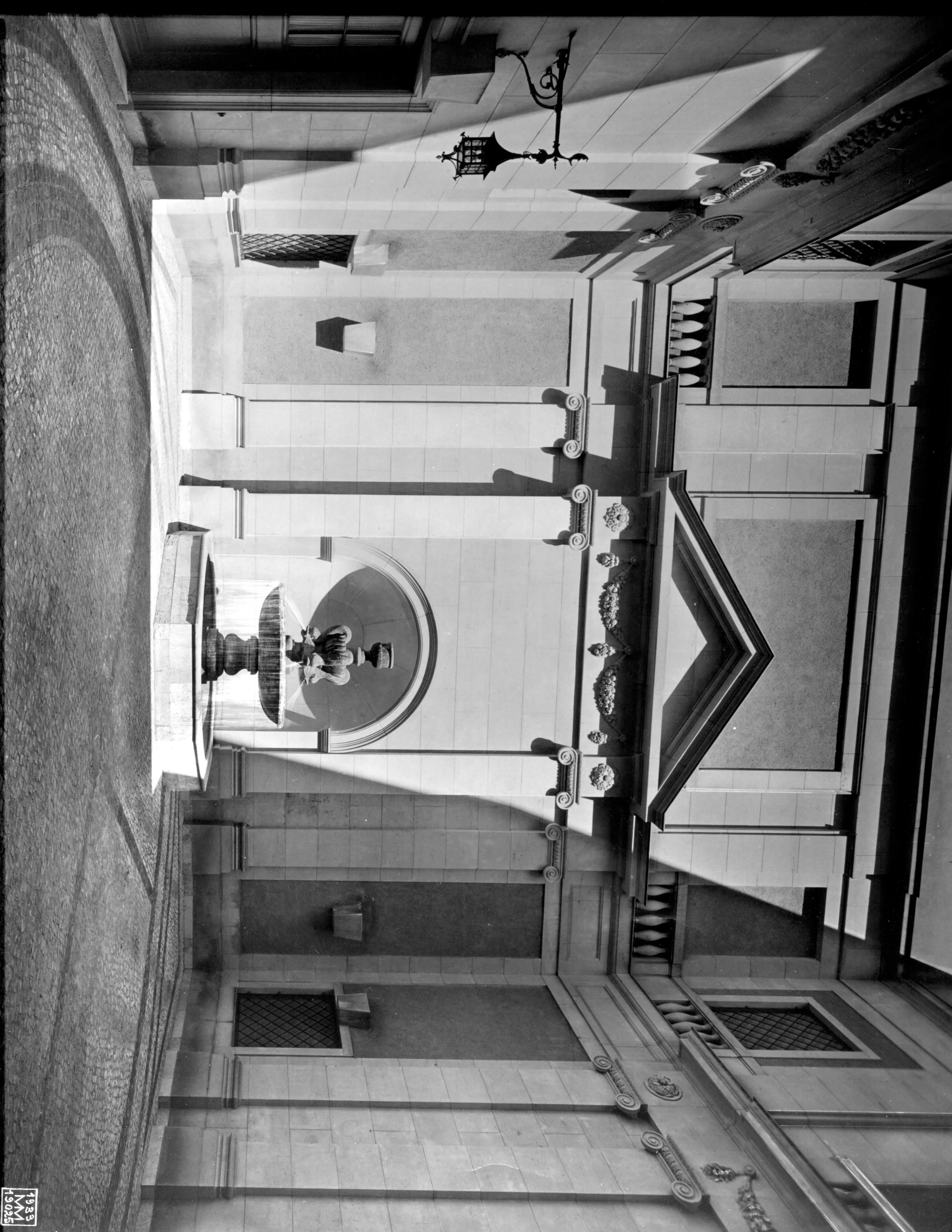
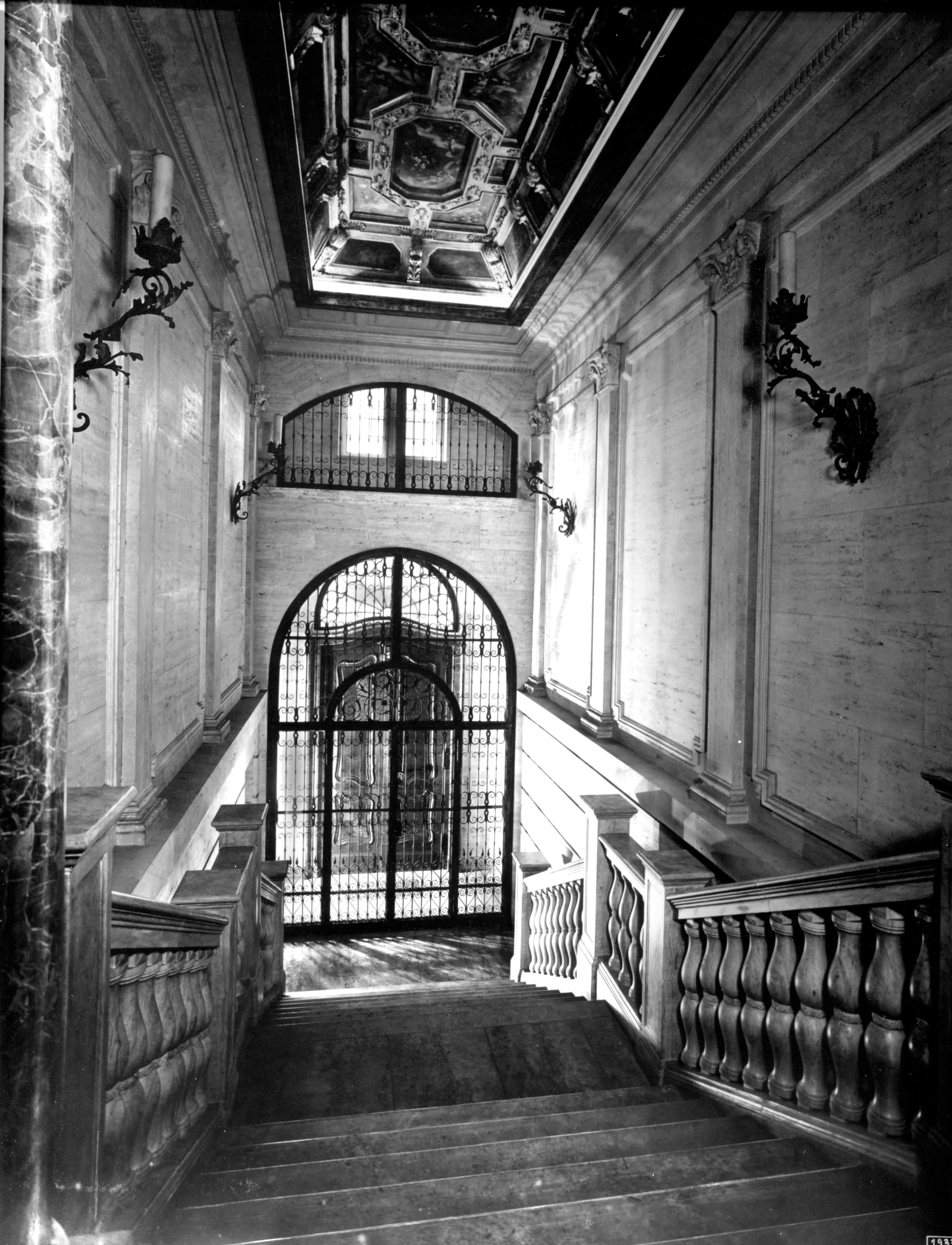






Jakob Goldschmidt’s success also resulted in two beautiful homes: one, acquired in 1921, at Virchowstrasse 43 (formerly Luisenstrasse 15) by the Griebnitzsee in the nearby Potsdam enclave of Neubabelsberg [Figs 3-5], and from 1929, another at Matthäikirchstrasse 31 (now Herbert-von-Karajan-Strasse), in Berlin’s Tiergarten district.
Glittering pre-war Neubabelsberg, where many of Jakob’s siblings also lived, was known for its mansions, architectural innovation and, with its location close to the Universum Film AG (UFA), was home to stars of the German silver screen, as well as writers, artists and statesmen.
Potsdam would later be the venue in 1945 for the Potsdam Conference at which three of the victorious nations — the United States, the Soviet Union and the United Kingdom — met to establish the new order following Nazi Germany’s defeat.
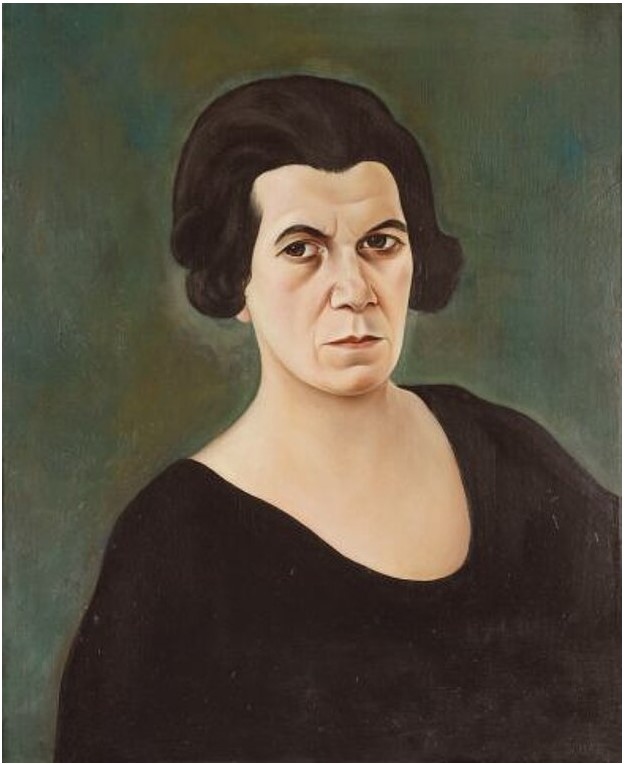
The Tiergarten home was squarely in the cultural hub of Berlin’s art scene, a mecca for the fine, design and performing arts. Matthäikirchstrasse [Figs 6-8] itself had long been established as home to many art collections and Goldschmidt would have walked the same paths as Paul Cassirer, Tilla Durieux and many notable collectors and patrons.
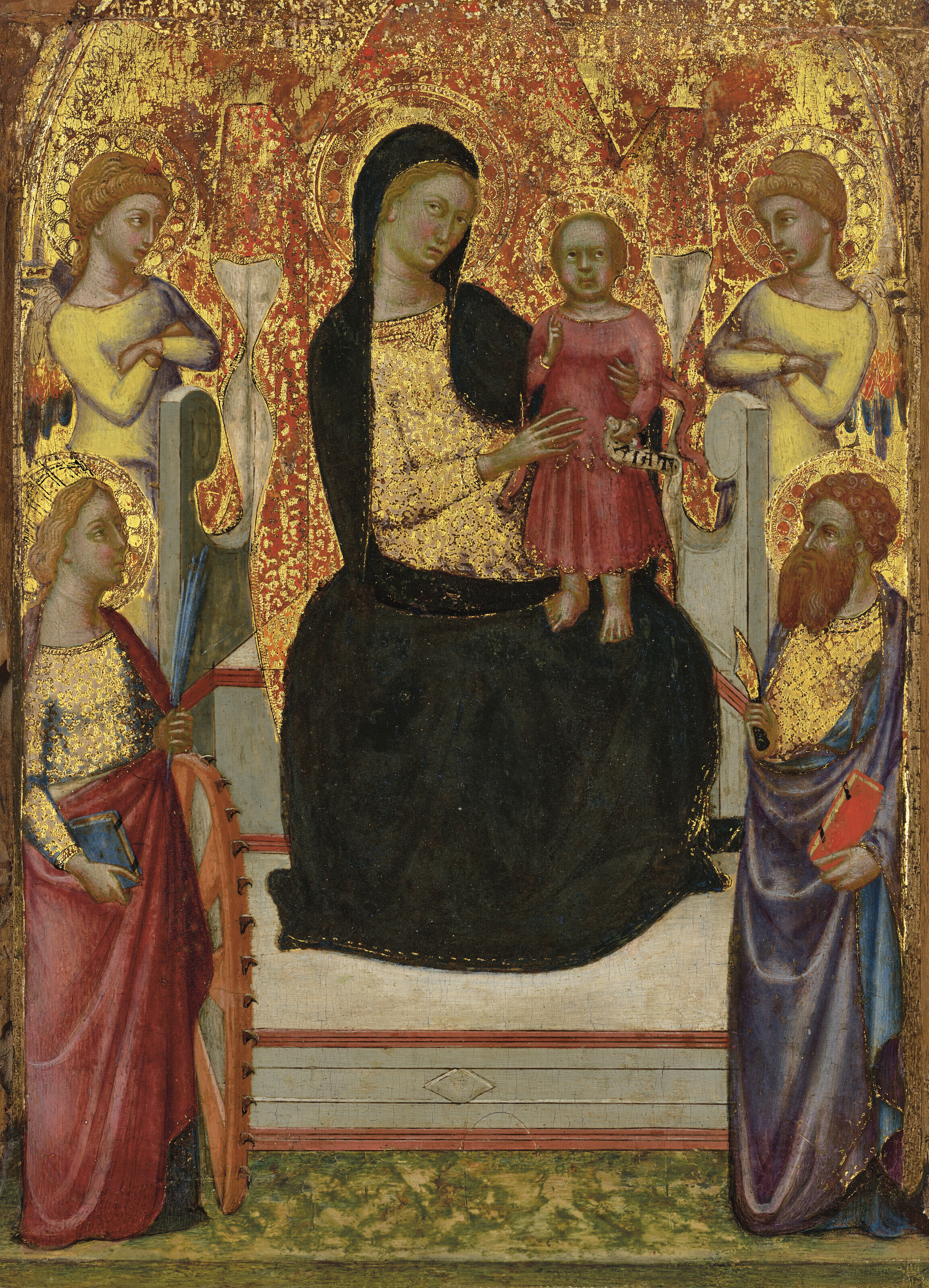
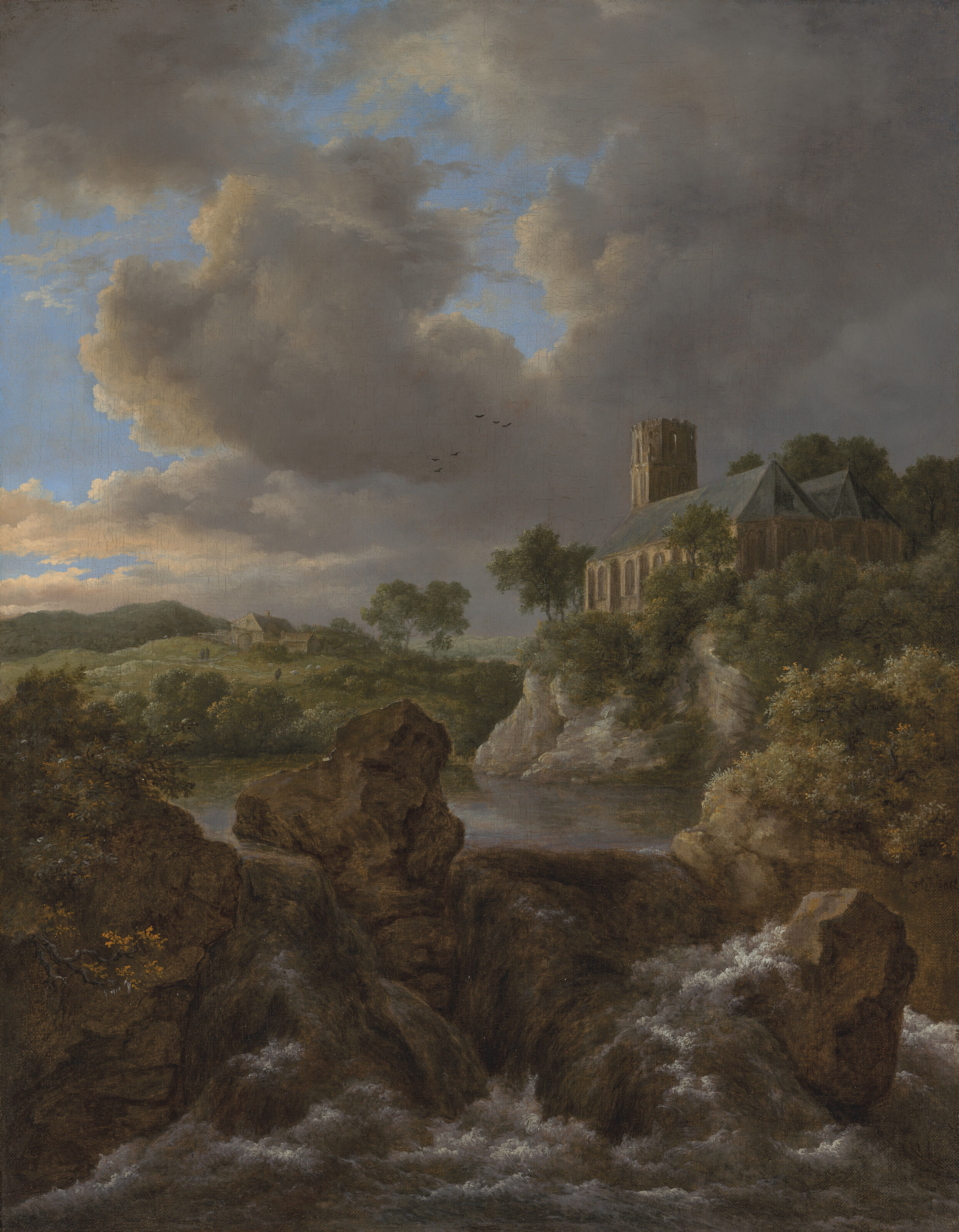
It was in these home environments and as an art patron to Berlin Museums and the Kaiser Friedrich Museumsverein, that Goldschmidt’s persona as an art connoisseur and collector flourished. His taste was eclectic: Old Masters [Figs 10, 11] were displayed alongside medieval sculpture [Fig. 12] and Asian porcelain [Fig. 13].
The jewels of the collection were undoubtedly an unparallelled collection of French Impressionists and Modern masters. Claude Monet’s The Palazzo Ducale, now at the Museum Barberini in Potsdam [Fig. 14], hung alongside Édouard Manet’s La Rue Mosnier aux drapeaux [Fig. 15] and Paul Cézanne’s The Card Player [Fig. 16]
The rich text element allows you to create and format headings, paragraphs, blockquotes, images, and video all in one place instead of having to add and format them individually. Just double-click and easily create content.
Quote sample text
A rich text element can be used with static or dynamic content. For static content, just drop it into any page and begin editing. For dynamic content, add a rich text field to any collection and then connect a rich text element to that field in the settings panel. Voila!
Headings, paragraphs, blockquotes, figures, images, and figure captions can all be styled after a class is added to the rich text element using the "When inside of" nested selector system.
Jakob Goldschmidt’s success also resulted in two beautiful homes: one, acquired in 1921, at Virchowstrasse 43 (formerly Luisenstrasse 15) by the Griebnitzsee in the nearby Potsdam enclave of Neubabelsberg [Figs 3-5], and from 1929, another at Matthäikirchstrasse 31 (now Herbert-von-Karajan-Strasse), in Berlin’s Tiergarten district.
Glittering pre-war Neubabelsberg, where many of Jakob’s siblings also lived, was known for its mansions, architectural innovation and, with its location close to the Universum Film AG (UFA), was home to stars of the German silver screen, as well as writers, artists and statesmen.
Potsdam would later be the venue in 1945 for the Potsdam Conference at which three of the victorious nations — the United States, the Soviet Union and the United Kingdom — met to establish the new order following Nazi Germany’s defeat.
The Tiergarten home was squarely in the cultural hub of Berlin’s art scene, a mecca for the fine, design and performing arts. Matthäikirchstrasse [Figs 6-8] itself had long been established as home to many art collections and Goldschmidt would have walked the same paths as Paul Cassirer, Tilla Durieux and many notable collectors and patrons.
It was in these home environments and as an art patron to Berlin Museums and the Kaiser Friedrich Museumsverein, that Goldschmidt’s persona as an art connoisseur and collector flourished. His taste was eclectic: Old Masters [Figs 10, 11] were displayed alongside medieval sculpture [Fig. 12] and Asian porcelain [Fig. 13].
The jewels of the collection were undoubtedly an unparallelled collection of French Impressionists and Modern masters. Claude Monet’s The Palazzo Ducale, now at the Museum Barberini in Potsdam [Fig. 14], hung alongside Édouard Manet’s La Rue Mosnier aux drapeaux [Fig. 15] and Paul Cézanne’s The Card Player [Fig. 16]

The rich text element allows you to create and format headings, paragraphs, blockquotes, images, and video all in one place instead of having to add and format them individually. Just double-click and easily create content.
Quote sample text
A rich text element can be used with static or dynamic content. For static content, just drop it into any page and begin editing. For dynamic content, add a rich text field to any collection and then connect a rich text element to that field in the settings panel. Voila!
Headings, paragraphs, blockquotes, figures, images, and figure captions can all be styled after a class is added to the rich text element using the "When inside of" nested selector system.
'To Henry,
May this book leave you with vivid memories, provide you clear lessons from a grim past, encourage you for the struggle and work in still dangerous times, and give you hope and confidence for a brighter future!
For all times, may this book’s dedication to you provide a guiding motif, joy and also comfort for your work.
Your uncle, Jakob Goldschmidt.
Arosa, Switzerland, at the turn of 1933/4'
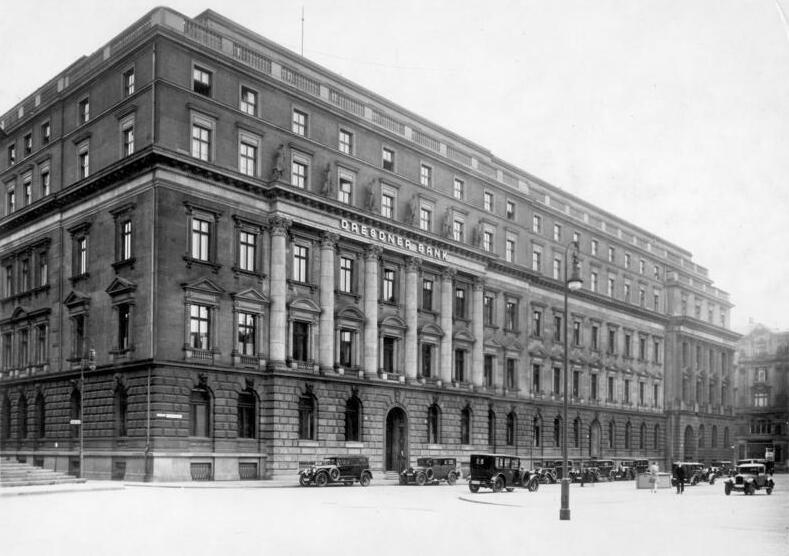
But in July 1931, Goldschmidt’s success came to an abrupt halt. The Danatbank [Fig. 20] became insolvent during the German banking system’s collapse. It was subsumed into the Dresdnerbank [Fig. 21] with Goldschmidt personally liable for a number of major loans. Der Führer, a newspaper full of bilious anti-Jewish posturing and Nazi propaganda, placed the blame for the bank’s collapse squarely with Goldschmidt. This compounded many years of hostile, virulent targeting of Goldschmidt by the Nazis from 1927 on, including a poster by Joseph Goebbels with Hitler denouncing him as ‘Public Enemy No.1’.

As part of rescue measures for the bank, Goldschmidt put up his houses and artworks as security but while his assiduous efforts to reduce his debt were effective to a degree, the ascension of the Nazi regime to government put a second hard stop to his business and any efforts to reestablish a firm footing.
Goldschmidt fled to Switzerland in 1933, leaving much behind, including his fortune and art collection, and then on to the United States in 1936. The Nazi regime’s actions systematically dismantled his assets and possessions in his wake. A ‘flight tax’ of over 1.8 million Reichsmarks was retrospectively imposed; the Matthäikirchstrasse home was sold to the Italian embassy. Although some artworks were released back to Goldschmidt for export abroad, including Chinese Porcelain offered at auction at Christie’s 29-30 June 1938, others were offered for auction at Helbing in Frankfurt on 23 June 1936 and at Lempertz in Cologne on 11 – 12 March 1938; the remainder still in Germany were declared forfeited to the Reich and auctioned with Hans W Lange in Berlin on 25 September 1941 at the instigation of the Berlin tax authorities.
Jakob Goldschmidt settled in New York in 1936, becoming a naturalised citizen in 1944 (following initial designation as an ‘enemy alien’), and re-established himself as a leading figure on the international financial stage, as a philanthropist and art collector.
He was followed to the United States by son Erwin and his wife Inga in 1941. Erwin, formerly a student at Christ Church, Oxford arrived in Miami via Havana, and later joined the Office of Strategic Services (O.S.S.) of the US Army in 1943.
Of those artworks Jakob managed to save from his collection in Germany, 7 outstanding paintings — three by Manet, two by Cézanne, and one each by Van Gogh and Renoir — created a media sensation when sold at auction in London in 1958, with this sale becoming a landmark in the post-war art market for Impressionist and modern sales. [Fig. 23]
The legacy of his collecting also passed down in the form of seeking the restitution of those artworks seized or dispersed during the Nazi era. First Jakob, then his son Erwin and now grandson Marc and family, have sought to locate and recover Jakob’s missing art. The Virchowstrasse 43 house was also restituted to the family in 2007. [Fig. 3]
Most recently, Renoir’s Le Cap d’ Antibes [Figs 24-25] came to light following its consignment and pre-sale checks at Christie’s, and working with the parties, a fair, just and amicable resolution has been found. The painting will be offered at Christie’s in Paris on 23 October 2026. This is the second Renoir to have been recovered recently: the State of North Rhine-Westphalia, the German Culture Ministry and the Cultural Foundation of the States funded the repurchase of another View of the Sea from Haut Cagnes for the Osthaus Museum - City of Hagen from the Goldschmidt family in 2023.
'The vision of the sea whispers the hope of a new light through the trees. By the power of love for all, our family's hope for joy andpeace overflows. We have so much to be thankful for.
La vision de la mer murmure l’'espoir d’'une lumière nouvelle à travers les arbres. Par la force de l'amour pour tous, l’'espoir de joie et de paix de notre famille déborde. Nous avons tant de raisons d'être reconnaissants.'
- Marc Goldschmidt

Masterpieces from Jakob Goldschmidt’s collection are also on view at the Museum Barberini in Potsdam included in the exhibition, The Impressionists: Monet, Morisot, Renoir, and Their Network, from 7 November 2026 to 21 February 2027.

The rich text element allows you to create and format headings, paragraphs, blockquotes, images, and video all in one place instead of having to add and format them individually. Just double-click and easily create content.
Quote sample text
A rich text element can be used with static or dynamic content. For static content, just drop it into any page and begin editing. For dynamic content, add a rich text field to any collection and then connect a rich text element to that field in the settings panel. Voila!
Headings, paragraphs, blockquotes, figures, images, and figure captions can all be styled after a class is added to the rich text element using the "When inside of" nested selector system.
Dr Sabine Rudolph, ‚Jakob Goldschmidt – Ewige Schuld?‘ KUR – Kunst und Recht, Vol. 22 (2020), Issue 3–4, pp. 70–77.
Seven years : thoughts on the German economy 1924-1931 / by Jakob Goldschmidt ; translated from the German by Marc Goldschmidt & Alfred Keller ; edited by Marc Goldschmidt.
Lorem ipsum dolor sit amet, consectetur adipiscing elit, sed do eiusmod tempor incididunt ut labore et dolore magna aliqua. Ut enim ad minim veniam, quis nostrud exercitation ullamco laboris nisi ut aliquip ex ea commodo consequat. Duis aute irure dolor in reprehenderit in voluptate velit esse cillum dolore eu fugiat nulla pariatur.
Block quote
Ordered list
Unordered list
Bold text
Emphasis
Superscript
Subscript
The rich text element allows you to create and format headings, paragraphs, blockquotes, images, and video all in one place instead of having to add and format them individually. Just double-click and easily create content.
A rich text element can be used with static or dynamic content. For static content, just drop it into any page and begin editing. For dynamic content, add a rich text field to any collection and then connect a rich text element to that field in the settings panel. Voila!
Headings, paragraphs, blockquotes, figures, images, and figure captions can all be styled after a class is added to the rich text element using the "When inside of" nested selector system.
.svg)
.svg)







%2C%201924%2C%20lithographie.jpg)


.svg)

The rich text element allows you to create and format headings, paragraphs, blockquotes, images, and video all in one place instead of having to add and format them individually. Just double-click and easily create content.
A rich text element can be used with static or dynamic content. For static content, just drop it into any page and begin editing. For dynamic content, add a rich text field to any collection and then connect a rich text element to that field in the settings panel. Voila!
Headings, paragraphs, blockquotes, figures, images, and figure captions can all be styled after a class is added to the rich text element using the "When inside of" nested selector system.


Related addresses: Schöneberger Ufer 38 until May 1935 (Architect: Heinrich Schweitzer); Schöneberger Ufer 71


Budapester Strasse (1932) not identical with today’s Budapester Strasse; Lützowstrasse 32 I (October 1925–1930); Königin-Augusta-Strasse 22 (October 1930–1932) - in 1933 this street becomes Tirpitzufer 84 and in 1947 it was renamed to Reichpietschufer. Lützowufer 19a (November 1932–1937), since 1933: Galerie Nierendorf; Großadmiral-von-Koester-Ufer 65 (1935–1947), Schöneberger Ufer.


Potsdamer Strasse 134c (Mid-Oct 1918-Sept 1924); Schöneberger Ufer 38 (July 1927-1931); Großadmiral-von-Koester-Ufer 39 respectively (since 1936) Großadmiral-von-Koester-Ufer 73 (1935-1939);Kluckstrasse 12 (May 1939 –Dec 1949)


Employee and partner at the Galerie / Kunstsalon Paul Cassirer

Related addresses: Street partially still exists as Hitzigallee.
Related addresses: Koenigin-Augusta-Strasse 46, in 1933 becomes Tirpitzufer 84, in 1947 becomes Reichpietschufer. Her last address in Berlin before deportation to Theresienstadt Bleibtreustrasse 17.

ALL BUILDINGS ARE DESTROYED
%2C%200152454.png)


Henry van de Velde (1894-1943), designer of the interior of the reading room at the gallery Paul Cassirer, Victoria Strasse 35.
(Street and building are destroyed)

Related addresses: Reichskammer der Bildenden Künste, Government agency 1933-1945; Blumes Hof 4-6 (since June 1934; street and building are destroyed; today's postcode 10785), Derfflingerstrasse 7 (from October 1935 until March 1937), Ahornstrasse 2 (1938). Today's postcode 10785


