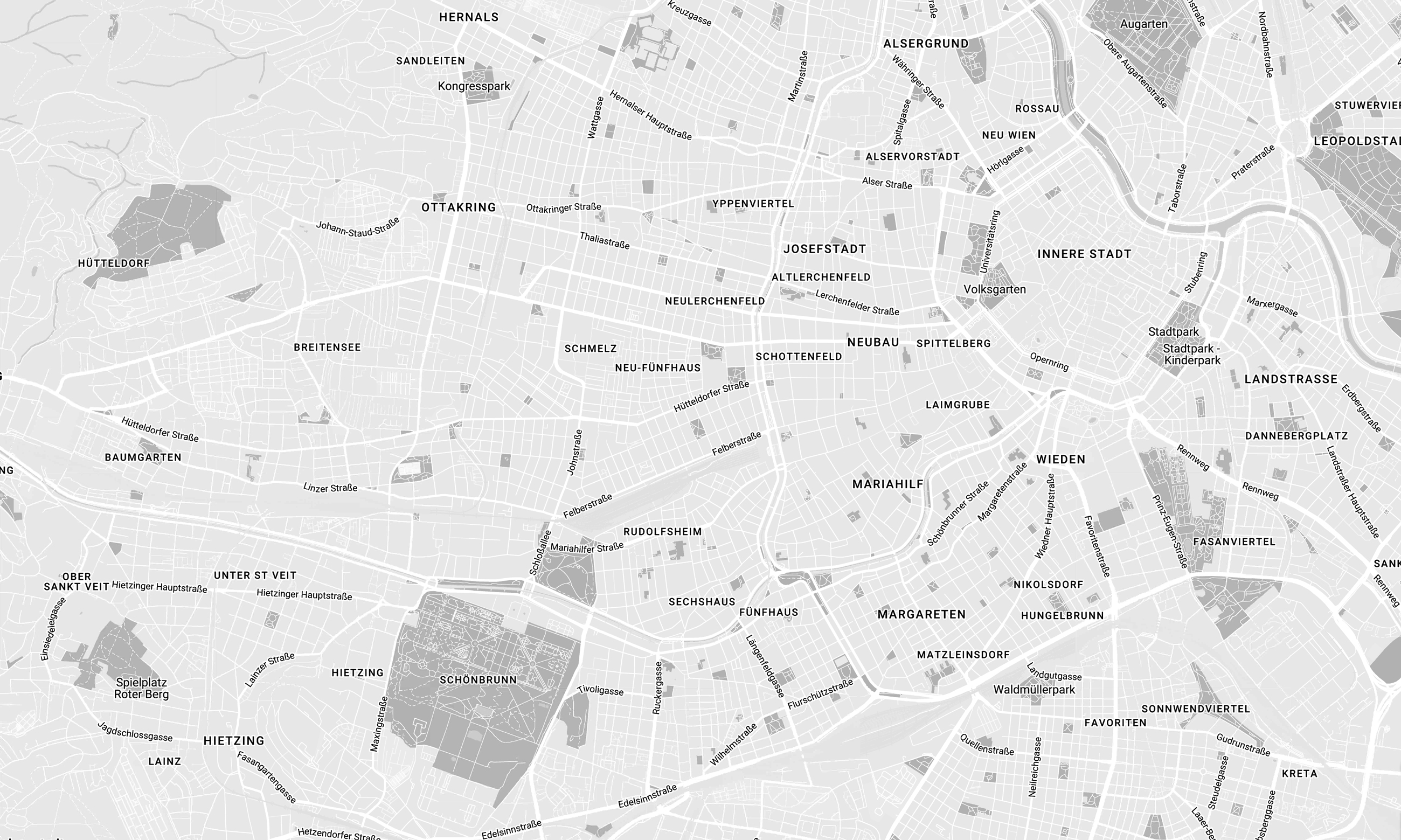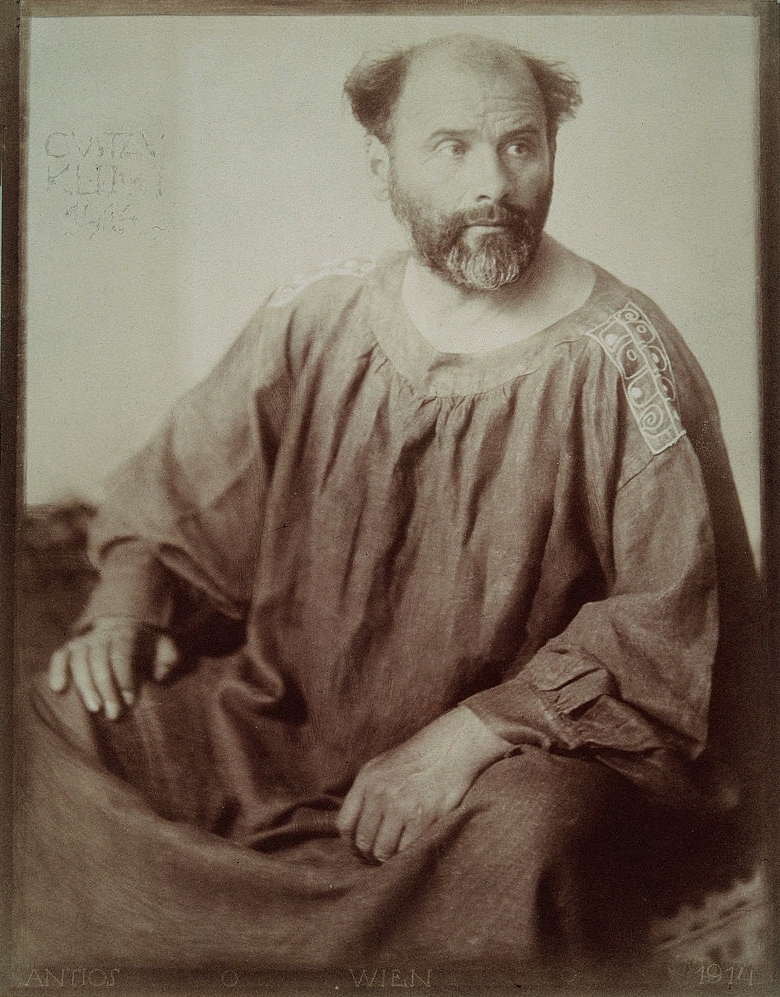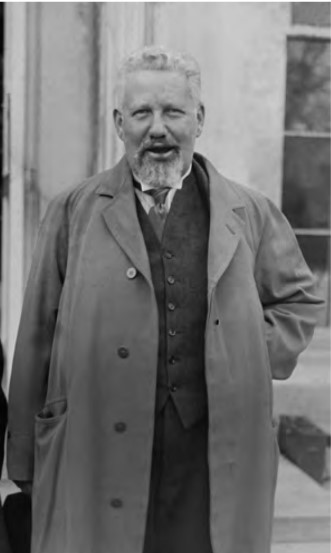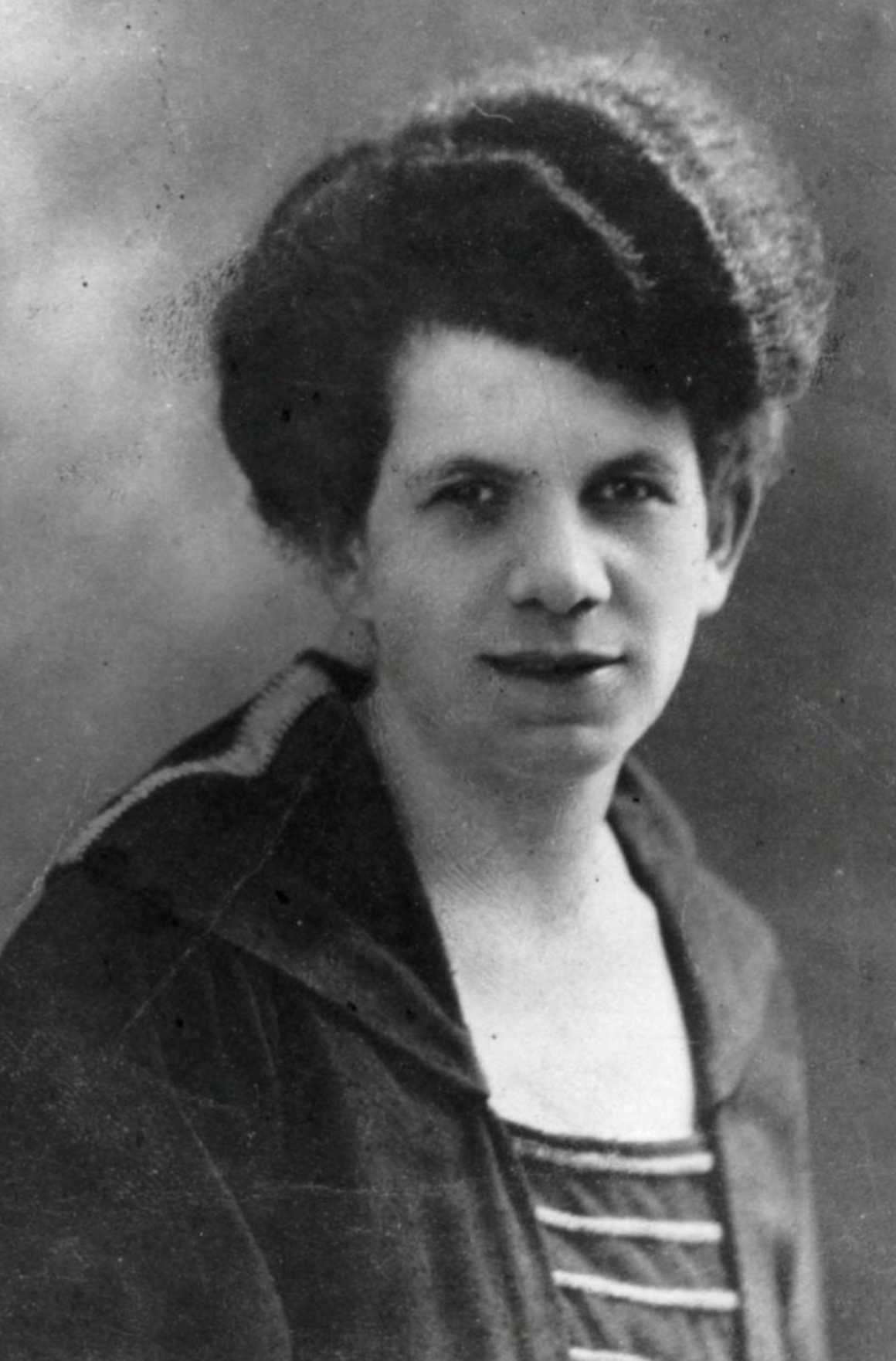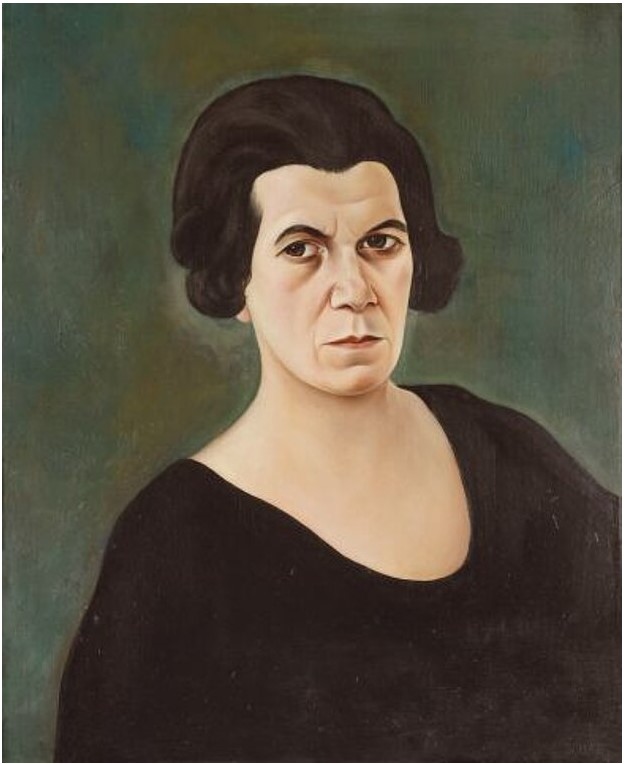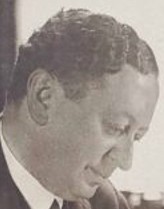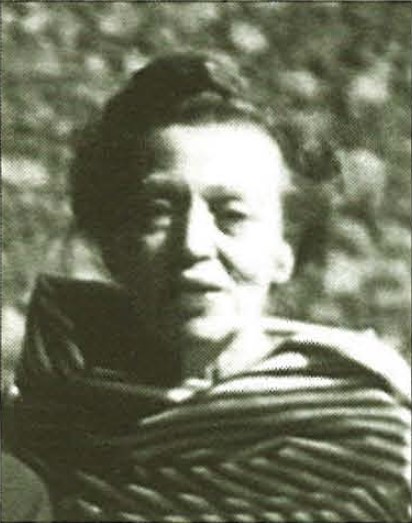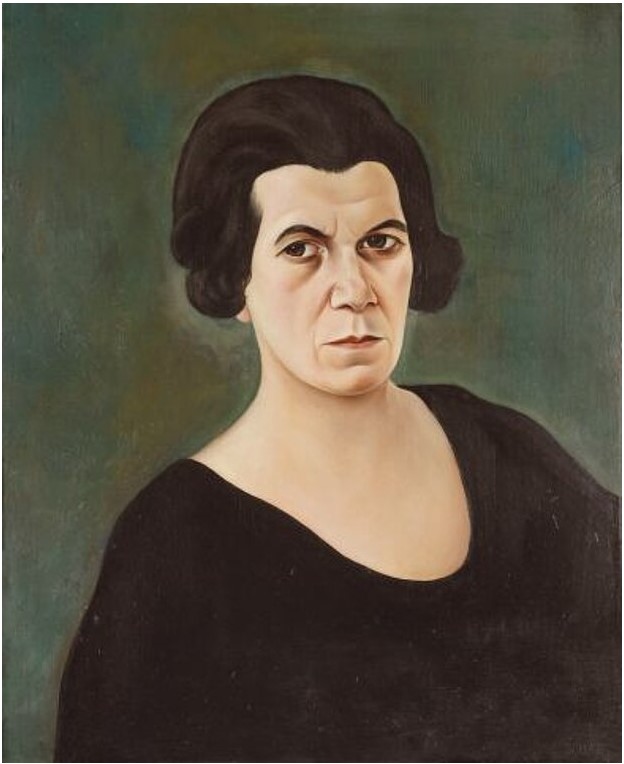
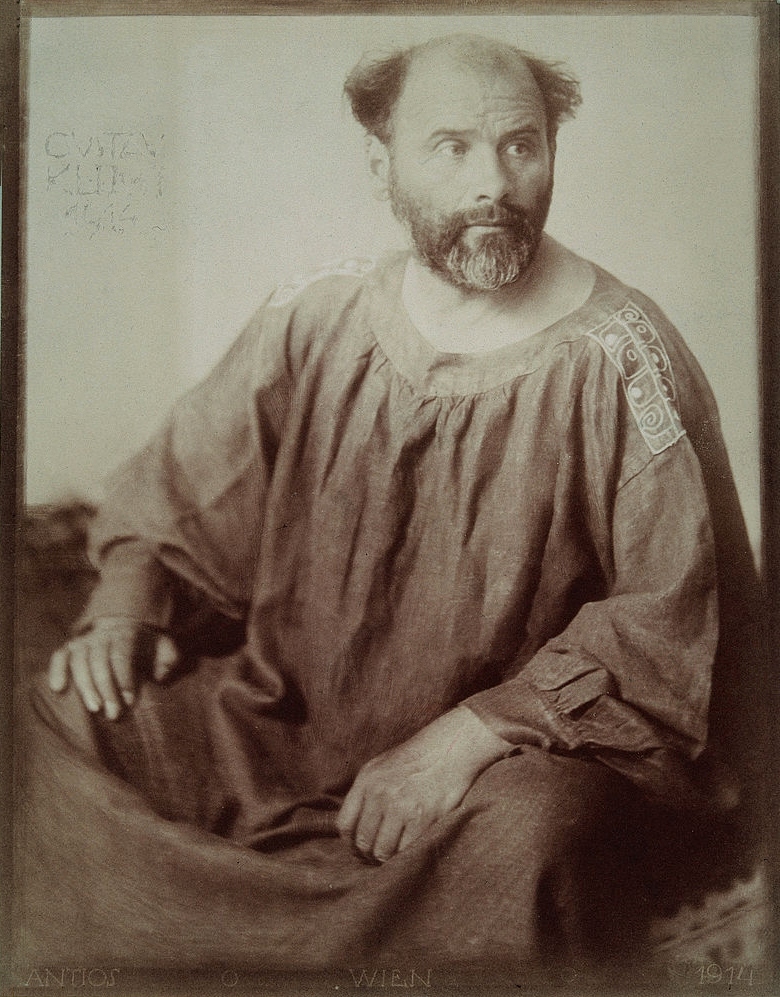
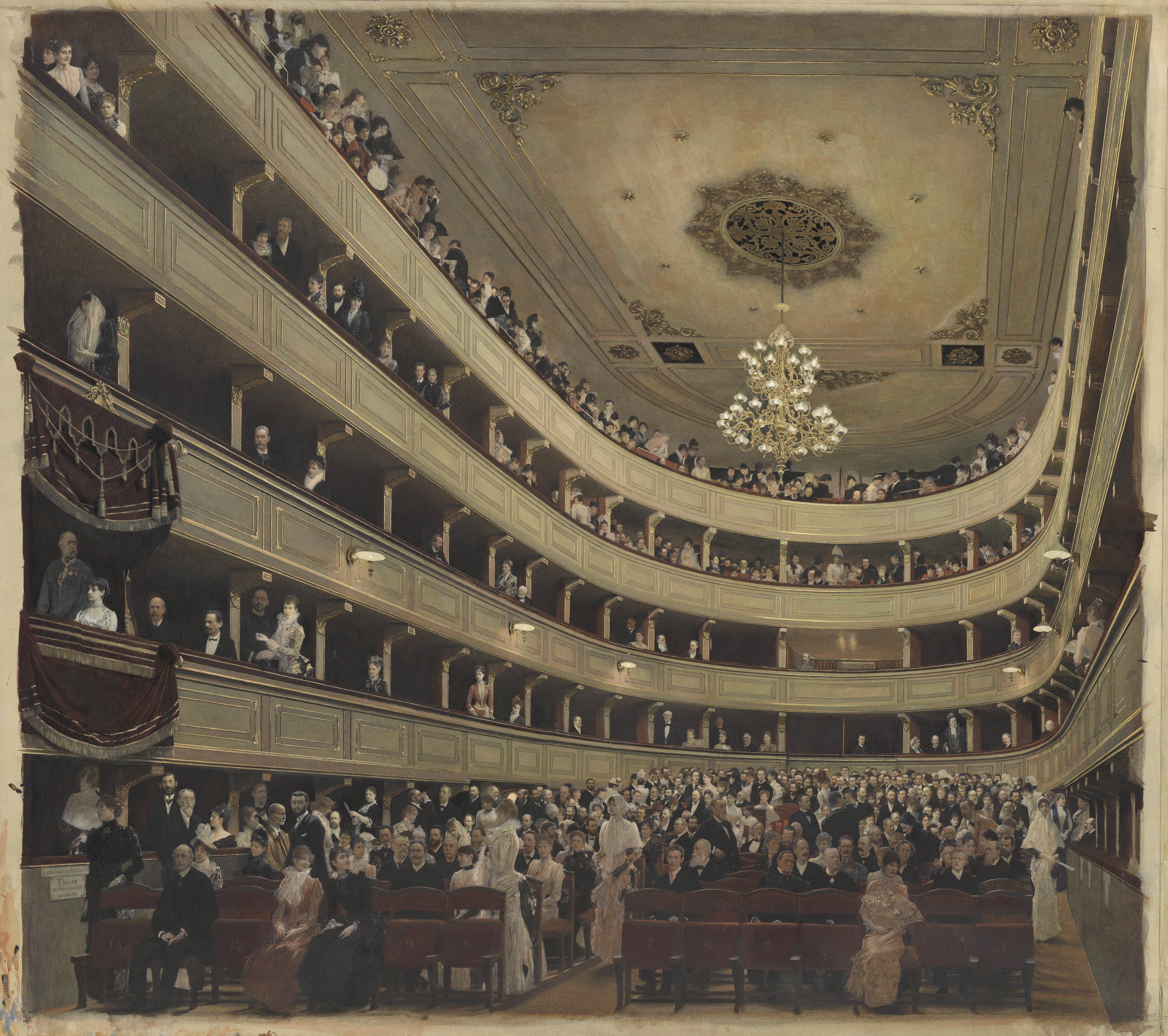
Gustav Klimt [Fig. 2] began his artistic career far from the glittering, gold-leafed portraits for which he’s now best known for. Trained at the Viennese Kunstgewerbeschule, a school of applied arts and crafts, he spent his early career as an architectural painter, producing murals and ceiling frescoes for public buildings including the Burgtheater [Figs. 3, 3a] and the Kunsthistorisches Museum. His early work was traditional and technically masterful; it was only later that Klimt developed the radical, ornamental style of portraiture that would come to define him.

Klimt’s turning point came in 1897, when he and a group of like-minded artists resigned from the conservative Künstlerhaus in protest to found the Vienna Secession. The group's ambition was to break away from academic tradition and open Austrian art to more modern and international ideas of art. Their motto, ‘to every age its art, to every art its freedom’, became a sort of manifesto for the movement and for Klimt’s own trajectory away from the academic realist portraiture of his training.
To every age its art, to every art its freedom…
As Klimt’s style evolved, so did his clientele. Vienna's cultural life was increasingly shaped by a new class of industrialists and financiers, many of them Jewish families who had only recently been granted full civil, political and religious rights following the 1867 Ausgleich of the Austro-Hungarian empire. This circle of wealthy assimilated Jewish families would turn to Klimt and artists of the Secession movement as a way to project their modernity and status. Their patronage came at a time when the older aristocracy still clung to the ‘safer’, more traditional and academic art that decorated the palaces of the Ringstrasse.
Lorem ipsum dolor sit amet, consectetur adipiscing elit, sed do eiusmod tempor incididunt ut labore et dolore magna aliqua. Ut enim ad minim veniam, quis nostrud exercitation ullamco laboris nisi ut aliquip ex ea commodo consequat. Duis aute irure dolor in reprehenderit in voluptate velit esse cillum dolore eu fugiat nulla pariatur.

Block quote
Ordered list
Unordered list
Bold text
Emphasis
Superscript
Subscript


Klimt’s sitters were drawn almost entirely from this new milieu, and the women among them were rarely just society wives. Figures like Adele Bloch-Bauer [Fig. 4], Serena Lederer and Ria Munk were collectors, patrons and cultural figures in their own right. Many of the great collecting families (e.g., the Zuckerkandls, the Steiners, the Munks, the Lederers and the Bloch-Bauers) were bound together by marriage and by their shared interest to Klimt’s work. His portraits function as a type of social mirror of fin-de-siècle Vienna. These works capture assimilated Jewish Vienna at the height of its visibility in the city’s cultural life, although its position remained socially and politically precarious.

Serena Lederer (1867–1943), née Pulitzer [Fig. 5], and her husband, August Lederer, are considered Klimt’s most important patrons and collectors of his work. August was a wealthy industrialist whose family made their fortune through a liquor and spirits distillery business.
Together, August and Serena Lederer assembled the largest private collection of Klimt’s work anywhere, which reportedly included around 15 paintings and numerous drawings. The couple also acquired several drawings by Klimt’s protégé, Egon Schiele, who gave drawing lessons to their son Erich. Erich would become a collector and patron in his own right and later, an important figure in post-war restitution.
The Lederer collection is thought to be one of the first collections targeted upon the Anschluss in 1938. Much of the collection was later burned in a fire at Schloss Immendorf in 1945, where retreating German forces had stored looted collections. This fire destroyed a significant portion of Klimt’s output, including his renowned University of Vienna Faculty Paintings (Philosophy, Medicine and Jurisprudence), two of which (Philosophy and Jurisprudence) had belonged to the Lederers.
August Lederer died in 1936, before the worst befell his family. Serena fled to Budapest, where she died in 1943. Their son Erich, who escaped to Geneva, spent decades after the war pursuing the return of what remained of the family’s collection, including a protracted, high-profile dispute over the Beethoven Frieze which remains ongoing [Fig. 6].

Their daughter, Elisabeth, remained in Vienna and in a bid for safety, claimed that she was Klimt’s illegitimate daughter, which would make her a ‘Halbjüdin’ (‘half-Jew’) under Nazi racial laws. Her mother Serena signed an affidavit from abroad to help legitimize her claim. Klimt’s reputation for fathering multiple children with various sitters and mistresses made the claim seem plausible. Ultimately, this allowed Elisabeth to survive in Vienna until her natural death in 1944.
Aranka Munk (1862–1941), née Pulitzer, was the sister of Serena Lederer and Jenny Steiner (1863–1958) through that connection the Munk family shared patronage with Klimt as well. Aranka married the industrialist Alexander Munk (1852–1924). However, the couple's life was marked by tragedy when their daughter Maria, known as Ria, took her own life in December 1911 after a broken-off engagement. Grief-stricken following her daughter’s death, Aranka approached Klimt to paint a posthumous portrait in memory of Ria.
Klimt attempted three portraits. The first, a deathbed portrait painted in 1912, upset Aranka so much that she chose to give it away rather than keep it. His second attempt was abandoned by Klimt himself and eventually reworked and repurposed; this portrait is thought to be Die Taenzerin, now in the Neue Galerie in New York. Klimt’s third and final attempt is an unfinished work now known as Portrait of Ria Munk III, which occupied Klimt until his own death in 1918 [Fig. 7].
The Munk family's experience of the Anschluss tragically mirrors the Lederers. The Munks’ Bad Aussee villa and its contents, including the unfinished Ria Munk III portrait, were seized by the Nazis. Aranka herself was deported to the Łódź ghetto on 19 October 1941 and murdered there; her daughter Lola was later also murdered at Chełmno. Decades later, the Munk heirs pursued and eventually won restitution of the unfinished portrait, which was returned to the family in 2009 — 68 years after Aranka and Lola's deportation and sold at Christie’s the following year [Christie’s 23 June 2010].
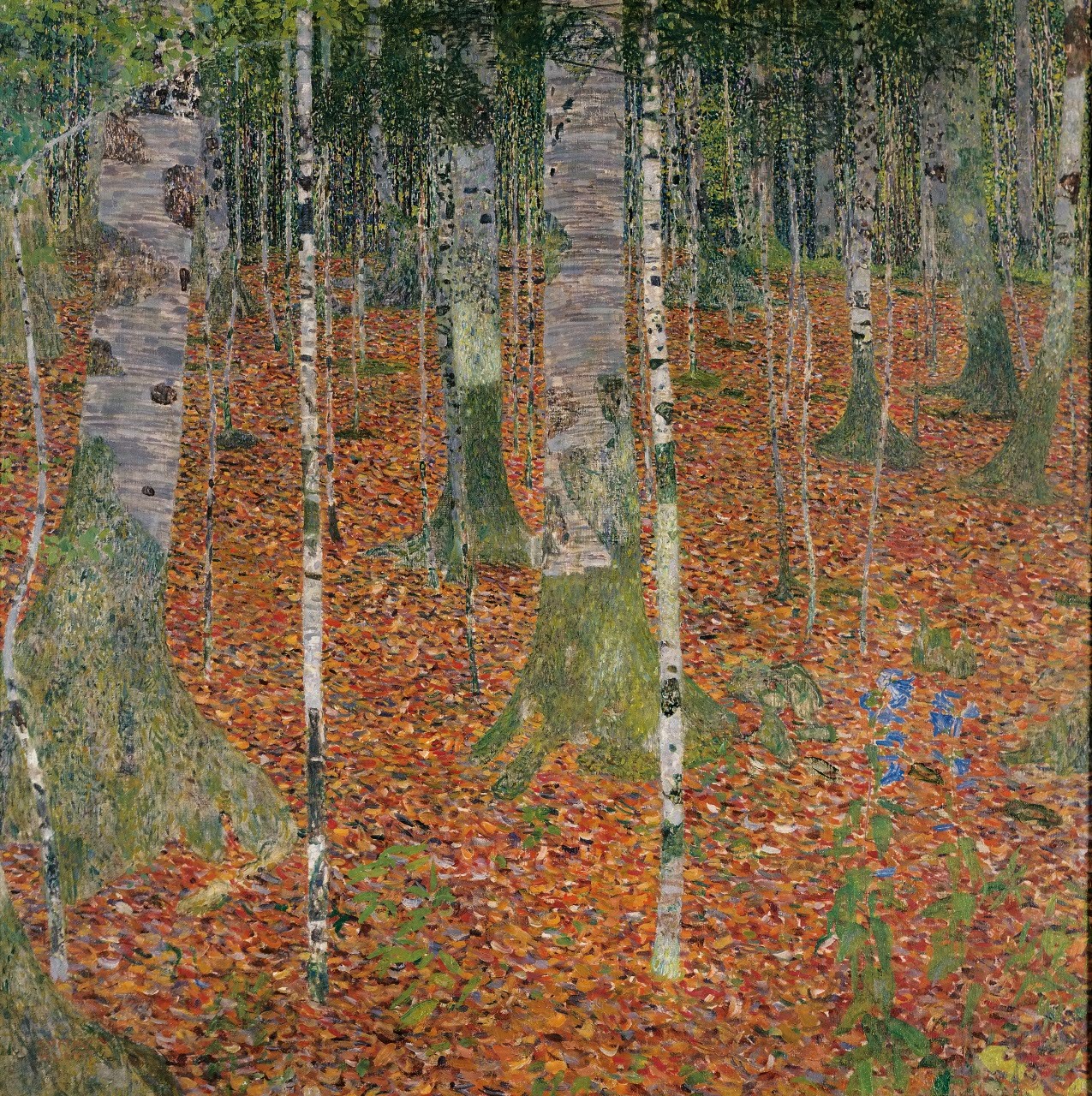
The most publicly recognised patron and sitter for Klimt is likely Adele Bloch-Bauer (1881–1925). Klimt painted Adele twice, most famously in the 1907 gold-leaf portrait now known as Portrait of Adele Bloch-Bauer I [Fig. 8], along with a second portrait completed in 1912; the Bloch-Bauers also owned several landscapes by Klimt. [Figs. 1, 9, 10]


Portrait of Adele Bloch-Bauer I was commissioned by Adele’s sugar-industrialist husband Ferdinand (1864–1945) and took Klimt three years to create; it was eventually completed amid speculation that the Austrian artist and his high-society subject were lovers. Following Adele’s death in 1925, the masterpiece remained in the Bloch-Bauer’s Vienna townhouse until the Nazi annexation of Austria in 1938. Targeted amid the Nazis’ cultural looting spree, it was one of five Klimt paintings taken from the Bloch-Bauer residence, all of which ended up in Vienna’s Belvedere Gallery. Ferdinand died in exile in Switzerland in 1945.
The Nazis also stole an engagement ring belonging to Maria Altmann, Adele’s niece. Altmann escaped from Austria, making her way to Los Angeles with her husband, where she opened a dress boutique.
After a lengthy legal battle with the Austrian state, the five Klimt paintings were returned to Adele’s niece, Maria Altmann, in 2006. Portrait of Adele Bloch-Bauer I [Fig. 8] was subsequently sold in a sale brokered by Christie’s, and now also hangs in the Neue Galerie in New York.
The other Bloch-Bauer Klimts were sold at a record-breaking Christie’s Impressionist and Modern Art auction in November 2006. The case, and its dramatisation in the film Woman in Gold, drew global attention to the issue of restitution.
The rich text element allows you to create and format headings, paragraphs, blockquotes, images, and video all in one place instead of having to add and format them individually. Just double-click and easily create content.
Quote sample text
A rich text element can be used with static or dynamic content. For static content, just drop it into any page and begin editing. For dynamic content, add a rich text field to any collection and then connect a rich text element to that field in the settings panel. Voila!
Headings, paragraphs, blockquotes, figures, images, and figure captions can all be styled after a class is added to the rich text element using the "When inside of" nested selector system.
In February 1943, in the middle of the war, a vast Klimt retrospective was staged in Vienna [Fig. 11]. The exhibition itself was a contradiction. The show was organized at the behest of Baldur von Schirach, former leader of Hitler Youth who was then serving as the Gauleiter of Nazi Vienna. Held in the old Secession building, by then renamed the Ausstellungshaus Friedrichstrasse, the exhibition featured some 66 Klimt paintings and 34 Klimt drawings and is to this day the most extensive exhibition of his works ever staged. For many of these works, it would be their final presentation before being burned in the 1945 fire at Schloss Immendorf.
The exhibition and its accompanying literature aimed to recast Klimt as a distinctly Austrian or even Germanic master, rooted in folk tradition and philosophical idealism rather than in the cosmopolitan, modernist, Jewish-influenced Vienna that had actually shaped and inspired his oeuvre. What made the exhibition furthermore surreal was its content: a significant proportion of the paintings on view had been confiscated from Jewish families in the years prior, with a dozen paintings from the Lederer collection alone. The cataloguing omitted the names of the original owners, and many portraits were retitled to erase any reference to their Jewish subjects; Adele Bloch-Bauer I became Damenbildnis vor Goldgrund (‘Portrait of a Woman in Front of a Gold Background’). In effect, the show put looted art on public display as a triumphant celebration of Nazi Viennese culture, even as the families who had once owned the works were being persecuted, dispossessed or murdered.
‘In an Orwellian act of language, not only was the existence of such Jewish individuals as Adele Bloch-Bauer “unthought”, but so were the circumstances, conditions and achievements of the portraits wiped out.’
Connected by marriage, friendship and shared patronage of Klimt, the Lederer, Munk and Bloch-Bauer families illustrate both the flourishing of Jewish cultural patronage in fin-de-siècle Vienna and the devastating losses following the Nazi Anschluss after 1938. Their collections, scattered, destroyed and only partially recovered over the following decades, remain central to how Klimt’s legacy and the broader history of Vienna is understood today.
Lillie, Sophie, Feindliche Gewalten: Das Ringen um Gustav Klimts Beethovenfries (Die Bibliothek des Raubes, vol. XVI), Vienna: Czernin Verlag, 2017.
Lillie, Sophie, Was einmal war: Handbuch der enteigneten Kunstsammlungen Wiens, Wien: Czernin Verlag, 2003.
Morowitz, Laura, Art, Exhibition and Erasure in Nazi Vienna, London: Routledge, 2023.
Morowitz, Laura, "'Heil the Hero Klimt!': Nazi Aesthetics in Vienna and the 1943 Gustav Klimt Retrospective," Oxford Art Journal, Vol. 39, No. 1 (2016), pp. 107–129.
https://www.factsandfiles.com/en/projects/art-collection-lederer/
https://www.klimt-database.com/en/
Lorem ipsum dolor sit amet, consectetur adipiscing elit, sed do eiusmod tempor incididunt ut labore et dolore magna aliqua. Ut enim ad minim veniam, quis nostrud exercitation ullamco laboris nisi ut aliquip ex ea commodo consequat. Duis aute irure dolor in reprehenderit in voluptate velit esse cillum dolore eu fugiat nulla pariatur.
Block quote
Ordered list
Unordered list
Bold text
Emphasis
Superscript
Subscript

The rich text element allows you to create and format headings, paragraphs, blockquotes, images, and video all in one place instead of having to add and format them individually. Just double-click and easily create content.
A rich text element can be used with static or dynamic content. For static content, just drop it into any page and begin editing. For dynamic content, add a rich text field to any collection and then connect a rich text element to that field in the settings panel. Voila!
Headings, paragraphs, blockquotes, figures, images, and figure captions can all be styled after a class is added to the rich text element using the "When inside of" nested selector system.