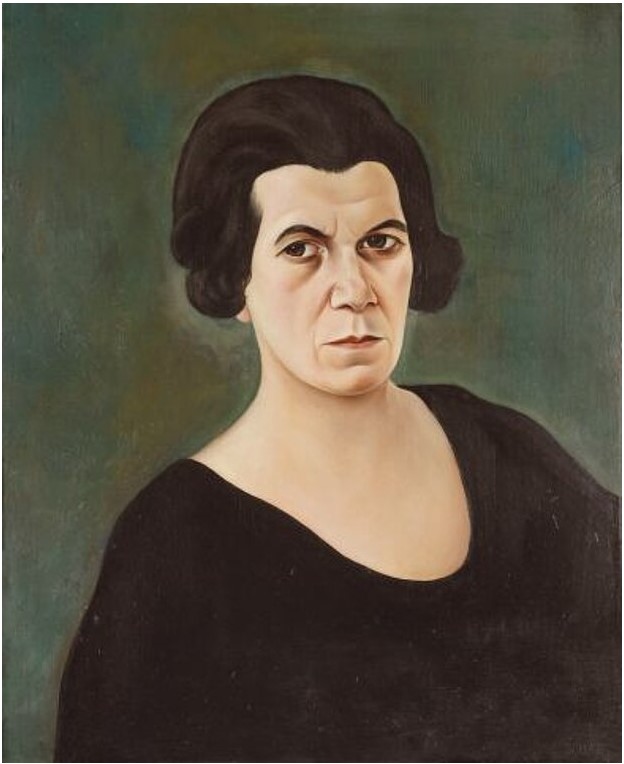
‘This city ... is indeed overflowing with sights that are simply a delight to the eye. Its streets are paved with culture, while the streets of other cities are paved with asphalt.’
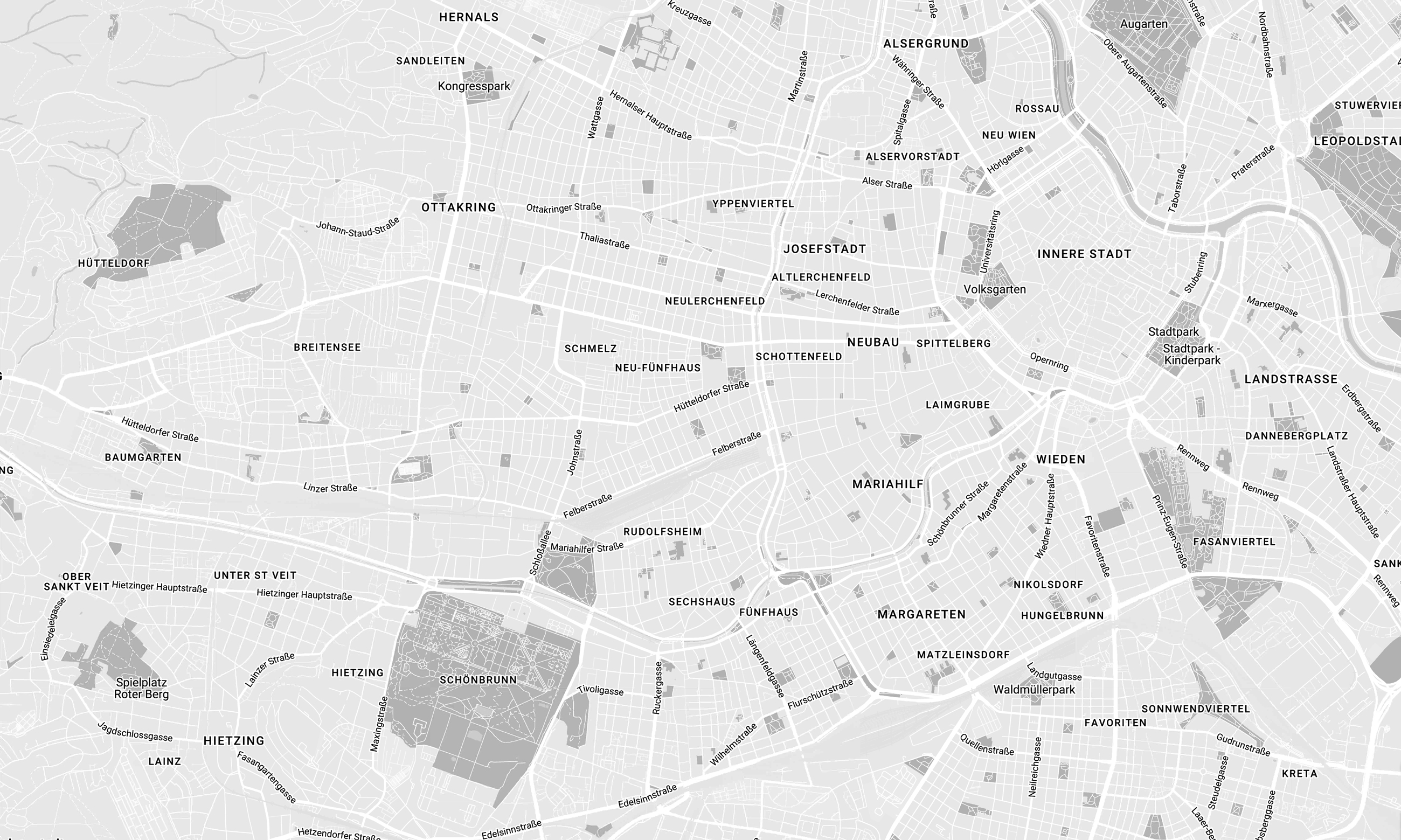
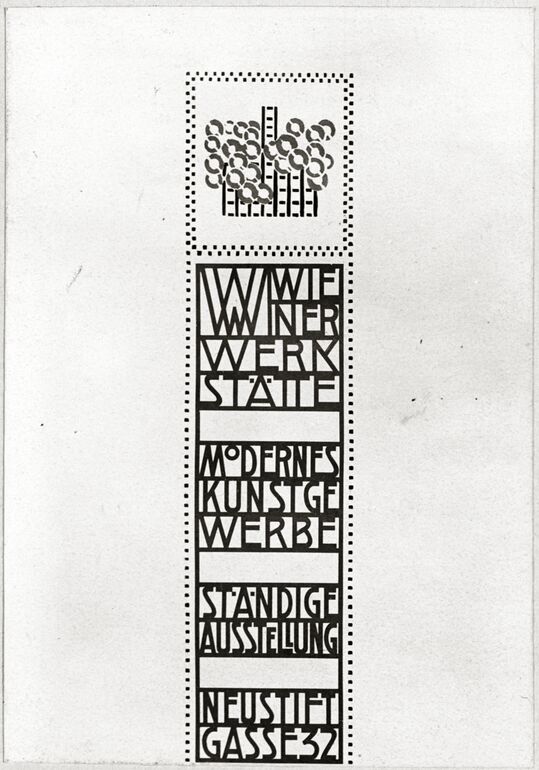
Vienna: that great city of culture in the heart of Central Europe, one of the epicentres of the former Habsburg Empire alongside Budapest and Prague. By the turn of the 20th century, it had become a hub for fine art and for the international art market. Its modernism was of a different flavour to that of Berlin, London or Paris. It was perhaps more deeply rooted in craft and decoration, both so beautifully embodied in the work of the Jugendstil [Fig. 2] movement and of the Wiener Werkstätte [Fig. 3].

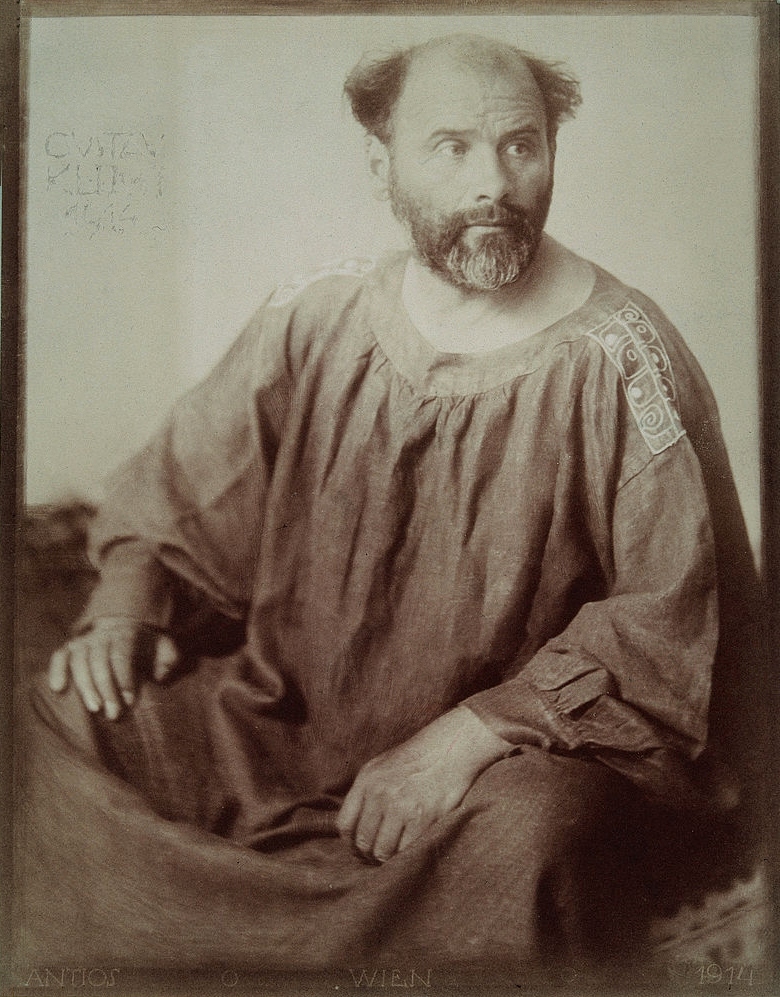
Vienna’s modernism shaped the taste for its art, and the taste of the many now-celebrated pre-war art collectors and patrons. Among these were a host of prominent Jewish families who earned fortunes in commodities like sugar, lumber, coal or steel. Their unique visions of championing and collecting modern artists found them in the most influential circles of Viennese and Austrian society. Often, the painters they commissioned were themselves at the very height of fashion. Gustav Klimt, Egon Schiele and Oskar Kokoschka, among others, were the idiomatic artists of Austrian modernism and their genius would transcend that time and place.
Lorem ipsum dolor sit amet, consectetur adipiscing elit, sed do eiusmod tempor incididunt ut labore et dolore magna aliqua. Ut enim ad minim veniam, quis nostrud exercitation ullamco laboris nisi ut aliquip ex ea commodo consequat. Duis aute irure dolor in reprehenderit in voluptate velit esse cillum dolore eu fugiat nulla pariatur.

Block quote
Ordered list
Unordered list
Bold text
Emphasis
Superscript
Subscript


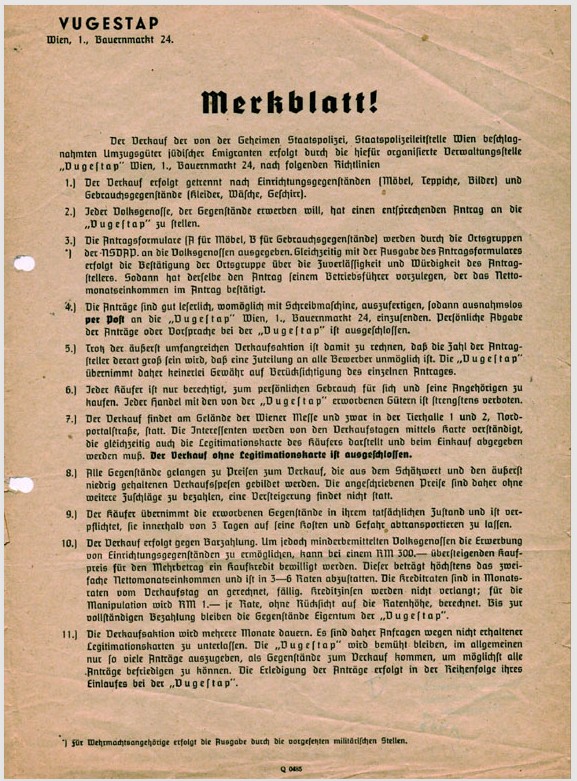


There were almost 200,000 Jews in Vienna by the late 1930s, with the densest population clustered in the city’s 2nd District, known as Leopoldstadt. The stability of their world was shattered with the Anschluss of Austria by Germany in March 1938, when the incoming troops and officials were welcomed with open arms and the Hitler salute by the majority of the city’s inhabitants. The city, and country, went from democracy to dictatorship between sunrise and sunset.


After March 1938, Vienna, a jewel of high society, culture, sophistication and assimilation, became a place of alienation, persecution and oppression for its Jewish citizens and anyone else who fell afoul of the new regime. As the Nazi clampdown and persecution intensified, those Jewish families who could flee Vienna and Austria for a place of greater safety left. Those who could not leave would eventually become trapped by the Nazis.

‘I was born in 1881 in a great and mighty empire, the Habsburg Monarchy, but don’t look for it on the map: it has been wiped away without a trace. I grew up in Vienna, the … supranational metropolis, and had to leave it like a criminal before it was demoted to a German provincial town.’
In Lost Vienna, Christie’s Restitution department highlights the biographies of some of the key Jewish collectors and art dealers in Vienna before the Anschluss and the turbulent histories of the works of art that they once owned. Some of the men and women who are featured here stayed on in the city and were later subject to persecution, deportation and murder. And some managed to flee to safety abroad before the terror became inescapable.
What these Jewish collectors and art dealers left behind were often unwritten stories: biographies and family histories that became fragmented by trauma and time. What they also left behind were the precious objects that they once owned, waiting to be discovered on the walls of museums or on the international art market.
Whether oil paintings, watercolours, drawings, pieces of furniture or items of decorative art, if such objects are allowed to speak to us today, they can tell untold stories of the lives of their former owners.
Stories of deep conviction from when Viennese culture, art and beauty flourished indiscriminately. Thousands of these stories were erased in the darkness of World War II and the covering-over of history. Those that remain, or have been retold, must be cherished.
The rich text element allows you to create and format headings, paragraphs, blockquotes, images, and video all in one place instead of having to add and format them individually. Just double-click and easily create content.
Quote sample text
A rich text element can be used with static or dynamic content. For static content, just drop it into any page and begin editing. For dynamic content, add a rich text field to any collection and then connect a rich text element to that field in the settings panel. Voila!
Headings, paragraphs, blockquotes, figures, images, and figure captions can all be styled after a class is added to the rich text element using the "When inside of" nested selector system.


‘Saying the word Vienna was like striking a tuning fork and then listening to find what tone it called forth in the person I was talking to. It was how I tested people. If there was no response, this was not the kind of person I liked. Vienna wasn’t just a city, it was a tone that either one carries forever in one’s soul or one does not.’
Karl Kraus, Von den Sehenswürdigkeiten, in: Die Fackel, no. 266, 30 November 1908, X. issue, pp. 7-8.
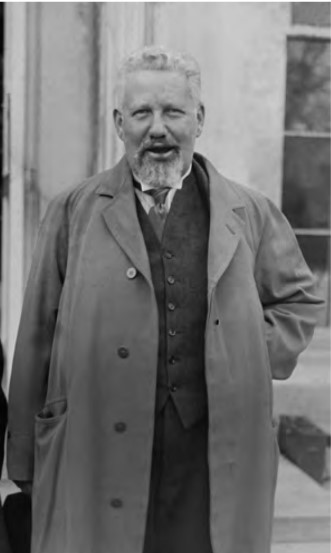
Sándor Márai, Embers (A gyertyák csonkig égnek), novel, 1st Hungarian edition published in 1942.
Stefan Zweig, The World of Yesterday: Memoirs of a European (Die Welt von Gestern. Die Erinnerungen eines Europäers), 1st English edition published in 1943.
Lorem ipsum dolor sit amet, consectetur adipiscing elit, sed do eiusmod tempor incididunt ut labore et dolore magna aliqua. Ut enim ad minim veniam, quis nostrud exercitation ullamco laboris nisi ut aliquip ex ea commodo consequat. Duis aute irure dolor in reprehenderit in voluptate velit esse cillum dolore eu fugiat nulla pariatur.
Block quote
Ordered list
Unordered list
Bold text
Emphasis
Superscript
Subscript